Hungry, Restless, and Still Losing Weight?
If your older cat is eating more than ever but getting thinner, an overactive thyroid may be the reason. Hyperthyroidism is one of the most common hormone disorders in senior cats. At Shiloh Animal Hospital in Dayton, OH, our veterinarians use a physical exam and simple bloodwork to confirm the diagnosis. We then build a treatment plan that helps your cat feel like themselves again and protects the heart and kidneys over the long term.
What Is Hyperthyroidism?
The thyroid glands sit on either side of the windpipe in the neck. They make hormones that control metabolism, which is the speed at which the body burns energy. In hyperthyroidism, one or both glands become enlarged, usually from a benign (non-cancerous) growth. The glands then produce too much thyroid hormone, and every system in the body speeds up.
The condition mostly affects cats over eight years old. It is rare in dogs, and when a dog does have high thyroid levels, it is often linked to a thyroid tumor that needs a different workup. This is one of the main reasons our team recommends annual exams, and twice-yearly visits for senior pets. Many cats show early changes in weight and bloodwork before owners notice anything at home.
Signs of Hyperthyroidism in Cats
Symptoms usually come on slowly and are easy to mistake for normal aging. Watch for:
- Weight loss despite a normal or increased appetite
- Increased thirst and urination
- Restlessness, hyperactivity, or night-time yowling
- Vomiting or loose stools (see our page on vomiting and diarrhea)
- A greasy, matted, or unkempt coat
- A fast heart rate or rapid breathing
- A small lump you can feel on the neck
Several of these signs overlap with other senior cat conditions, including diabetes and kidney disease. Because of this overlap, testing is the only reliable way to know what is going on.
How We Diagnose Hyperthyroidism
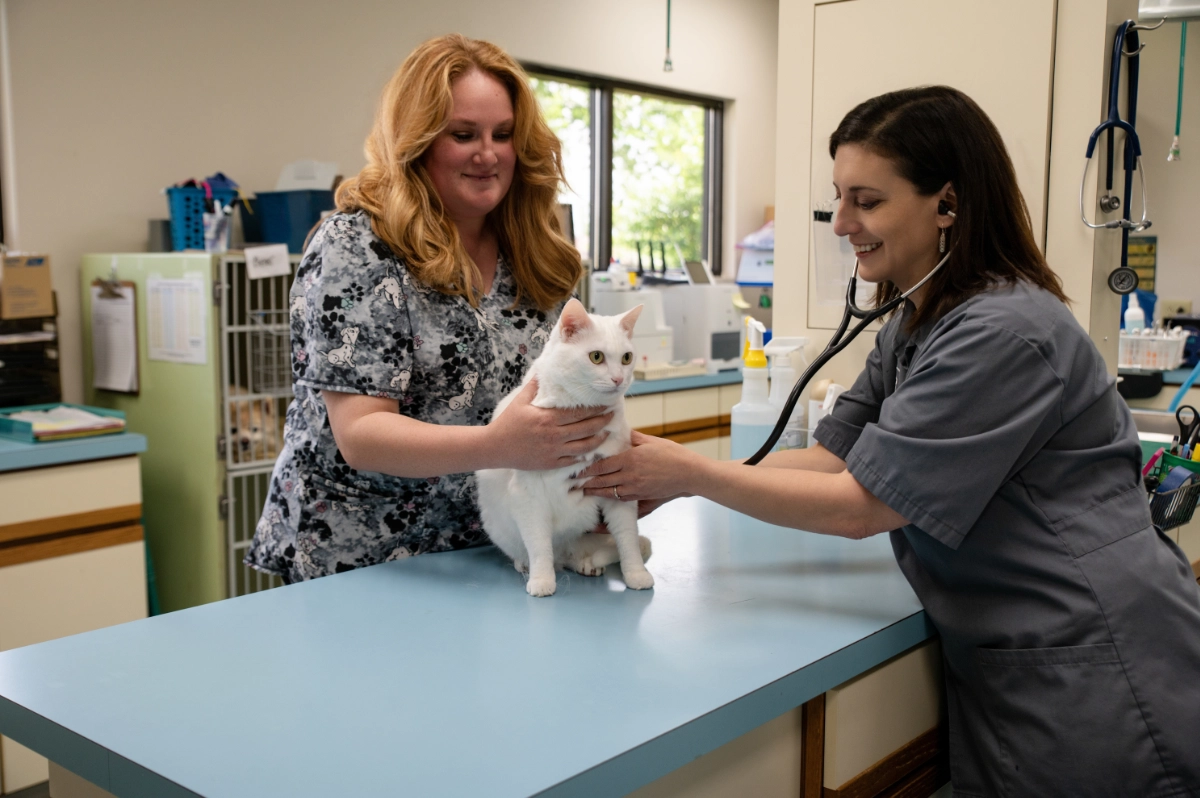
Your visit starts with a full nose-to-tail exam. Your veterinarian will check your cat’s weight, heart rate, blood pressure, and neck for an enlarged thyroid gland. A blood test that measures total T4, the main thyroid hormone, confirms most cases. We usually run a full blood panel and urinalysis at the same time. Hyperthyroidism can hide kidney problems by increasing blood flow to the kidneys, so we want a clear picture of kidney function before and during treatment.
If the T4 result is borderline but your cat has symptoms, we may recommend retesting or additional thyroid tests. You can learn more about our approach to care on our veterinary services page.
Treatment Options
Hyperthyroidism is very treatable. The right choice depends on your cat’s age, overall health, kidney values, and what works for your household. Your veterinarian will walk you through each option:
- Daily medication: Methimazole is given as a pill or as a gel rubbed on the inside of the ear. It controls hormone levels and is the most common starting point. Our in-house pharmacy can fill it, and refills are easy to request online through our prescription refill page.
- Prescription iodine-restricted diet: A special food limits the iodine the thyroid needs to make hormone. It works best for single-cat homes where the cat eats nothing else.
- Radioactive iodine therapy: This single treatment destroys the overactive tissue and is often considered a cure. It is performed at specialty facilities, and we can discuss a referral if it is a good fit for your cat.
- Surgery: Removing the affected gland is an option for some cats who are good anesthetic candidates.
Ongoing Monitoring and Care
After treatment starts, we recheck bloodwork within a few weeks to adjust the dose. We also keep a close eye on kidney values. Once your cat is stable, routine checks every few months help keep hormone levels in a healthy range. Most cats regain weight, their coats improve, and they settle back into their normal routine.
Untreated hyperthyroidism can lead to heart disease, high blood pressure, blindness, and severe muscle loss. If your cat suddenly stops eating, has trouble breathing, or collapses, contact us right away or visit our emergency services page for guidance.
Long-term care is easier to manage with planning. Many families use pet insurance or CareCredit to spread out the cost of testing and medication. The GreatPetCare app helps you track reminders and records. You can also meet our veterinary team or browse other conditions we treat.
Hyperthyroidism FAQs
What causes hyperthyroidism in cats?
Most cases are caused by a benign growth called an adenoma on one or both thyroid glands. The exact trigger is not fully understood, but age plays a major role, and most affected cats are over eight years old.
Can dogs get hyperthyroidism?
It is uncommon. Dogs are far more likely to have an underactive thyroid. When a dog does have high thyroid levels, it is often related to a thyroid tumor, and your veterinarian will recommend further testing.
Is hyperthyroidism painful for my cat?
It is not usually painful, but it puts strain on the heart and body. Cats often feel anxious, restless, and hungry all the time. Treatment typically brings quick relief from these symptoms.
How is hyperthyroidism diagnosed?
A physical exam and a blood test that measures the T4 thyroid hormone confirm most cases. At Shiloh Animal Hospital in Dayton, OH, we also check kidney function and blood pressure so we can choose the safest treatment.
Will my cat need medication for life?
Cats on methimazole or a prescription diet usually need it long-term. Radioactive iodine therapy and surgery can be curative options, and your veterinarian can help you decide whether either is right for your cat.
How does hyperthyroidism affect the kidneys?
An overactive thyroid increases blood flow to the kidneys. This can mask existing kidney disease. Once thyroid levels come down, kidney values may rise, which is why we monitor bloodwork closely during treatment.
How often will my cat need rechecks?
Expect a recheck a few weeks after treatment begins, and again after any dose change. Once your cat is stable, bloodwork every three to six months is typical. Call (937) 278-3484 to schedule.
Help Your Senior Cat Feel Like Themselves Again
Weight loss and constant hunger are not just signs of getting older. A quick exam and blood test can give you answers. Call Shiloh Animal Hospital at (937) 278-3484, or request a visit with our Dayton, OH veterinarians today.