Answers When Your Pet Isn’t Feeling Like Themselves
Pets can’t tell us when something hurts. They show it instead: scratching more than usual, skipping meals, drinking more water, or slowing down on walks. At Shiloh Animal Hospital in Dayton, OH, our veterinarians find out what is behind those changes. We treat the most common conditions in dogs and cats, using a careful exam, in-house diagnostics and a treatment plan that fits your pet and your family. Many conditions on this page respond well to treatment when they are caught early. Others can’t be cured but can be managed so your pet stays comfortable for years.
Common Conditions in Dogs and Cats
Below are the health problems we see most often at our Dayton animal hospital. Choose a condition to learn about its signs, causes and treatment options, and when your pet should be seen.
Mouth, Skin and Ears
- Dental Disease: Bad breath, red gums and loose teeth are signs of periodontal disease. Most dogs and cats have some form of it by age three. Left untreated, it causes pain and can affect the heart, liver and kidneys.
- Skin Allergies: Constant licking, chewing, hot spots and hair loss often point to environmental or food allergies. We look for the trigger and control the itch.
- Ear Infections: Head shaking, odor, discharge and scratching at the ears are common in dogs with floppy ears or allergies. Infections that are not fully treated tend to come back.
- Parasites: Fleas, ticks, heartworms and intestinal worms are a year-round risk in the Miami Valley. Prevention costs far less than treating an infestation or heartworm disease.
Joints, Weight and Mobility
- Arthritis: Stiffness after rest, trouble on stairs or reluctance to jump are often early signs of joint pain, especially in older and larger pets. Pain control and weight management can make a big difference.
- Obesity: Extra weight shortens pets’ lives and raises the risk of arthritis, diabetes and other diseases. We build realistic weight-loss plans with diet and exercise guidance.
Hormones and Internal Organs
- Diabetes: Increased thirst, frequent urination and weight loss despite a good appetite are classic signs. With insulin, diet changes and regular monitoring, many diabetic pets live full lives.
- Kidney Disease: Common in senior cats and dogs, chronic kidney disease often shows up first on routine bloodwork. Early diagnosis lets us slow its progression.
- Hyperthyroidism: An overactive thyroid is one of the most common conditions in older cats. Weight loss, a big appetite, vomiting and restlessness are typical signs.
Digestive and Urinary Problems
- Vomiting and Diarrhea: An upset stomach can come from diet changes, parasites, infections or more serious illness. We help you know when it can be watched at home and when your pet needs care.
- Urinary Tract Infections: Straining, frequent trips outside, accidents or blood in the urine call for a prompt visit. A male cat straining with little or no urine is an emergency.
How We Diagnose and Treat Your Pet
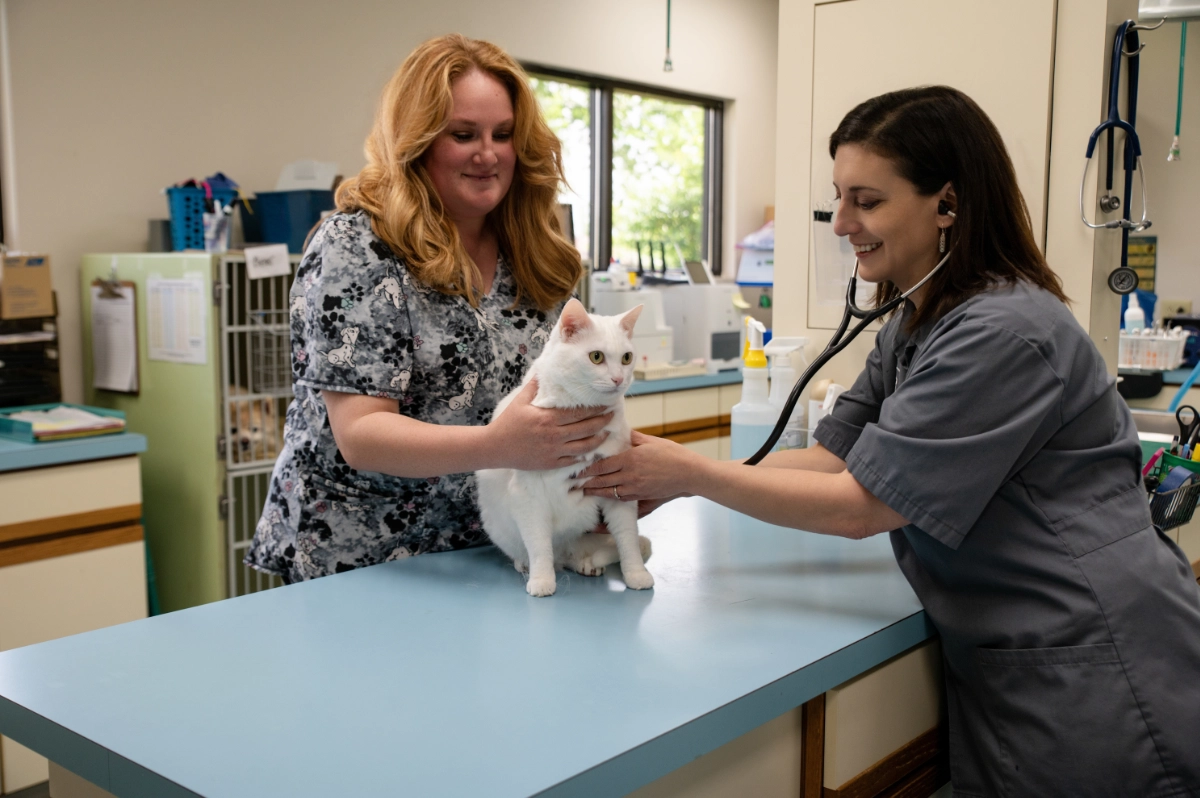
Every visit starts with a nose-to-tail exam and a conversation about what you’ve noticed at home. Details like when symptoms started, changes in appetite or thirst, and any new foods or medications help us narrow down the cause. From there, we may recommend bloodwork, urinalysis, skin or ear cytology, fecal testing or other diagnostics to confirm what is going on.
Once we have answers, we explain your pet’s options in plain language and work with you on a plan that fits your pet’s needs and your budget. Many medications and prescription diets are available through our in-house pharmacy, so you can often leave with what your pet needs the same day. Payment options such as CareCredit and pet insurance can help with ongoing care.
Catching Problems Early
Many of the conditions above develop slowly, and pets are good at hiding discomfort. That is why annual exams matter so much. Routine wellness visits and senior bloodwork often reveal kidney disease, thyroid problems, diabetes and dental disease before your pet shows obvious signs. You can see all the care we provide on our veterinary services page.
If your pet is struggling to breathe, can’t urinate, has collapsed or has eaten something toxic, call us right away at (937) 278-3484 or visit our emergency services page for guidance.
Questions About Pet Health Conditions
What conditions does Shiloh Animal Hospital treat?
Our veterinarians diagnose and treat a wide range of conditions in dogs and cats, including dental disease, skin allergies, ear infections, parasites, arthritis, obesity, diabetes, kidney disease, hyperthyroidism, vomiting and diarrhea, and urinary tract infections. If your pet’s problem isn’t listed, call us at (937) 278-3484 and we’ll help.
How do I know if my pet needs to see a veterinarian?
Schedule a visit if you notice changes that last more than a day or two, such as eating or drinking more or less, weight changes, scratching, limping, accidents in the house, or changes in energy. Difficulty breathing, collapse, straining to urinate without results or suspected poisoning need immediate care.
What tests might my pet need?
It depends on the symptoms. Common tests include bloodwork, urinalysis, fecal exams, skin and ear cytology, and thyroid testing. We will explain why each test is recommended and what it can tell us before we run it.
Can chronic conditions like diabetes or kidney disease be managed?
Yes. While some chronic conditions can’t be cured, many pets live comfortably for years with the right medication, diet and regular monitoring. We schedule rechecks to adjust treatment as your pet’s needs change.
Are some conditions more common in senior pets?
Arthritis, kidney disease, hyperthyroidism, diabetes and dental disease all become more common as pets age. Senior pets benefit from wellness exams and bloodwork to catch these problems early.
Can I fill my pet’s prescriptions at your hospital?
Yes. Our in-house pharmacy carries many of the medications and prescription diets we prescribe, and you can request refills through our prescription refill page.
Do you see new patients for a specific health concern?
Absolutely. New clients are welcome at our Dayton, OH hospital for both wellness care and sick visits. Visit our new clients page or call (937) 278-3484 to schedule.
Get Your Pet Feeling Better
If something seems off with your dog or cat, trust your instincts and let our team take a look. Shiloh Animal Hospital has cared for Dayton pets for generations, and our veterinary team is ready to help. New clients are always welcome. Call (937) 278-3484 or request a visit online.